FORKLIFT ACCESSORIES AND PLATFORM ATTACHMENTS
We carry forklift accessories to help warehouses, manufacturing plants, distribution centers, and municipal fleets do more with the equipment they already have. Instead of buying an additional machine for every specialized task, operations teams add the right attachment to a forklift you already own and put it to work. Let's maximize your forklift operation with accessories built to support it.








Choosing the Right Attachment for the Application
The right attachment depends as much on the environment your forklift works in as on the task itself. Matching forklift attachments to the job at hand, rather than the forklift model alone, keeps a purchase from sitting unused in a corner of the yard.
Warehousing and distribution: Drum handlers, pallet dumpers, and material lifting attachments for repetitive moves
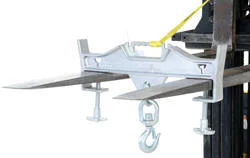
Manufacturing and utilities: Booms, hoisting hooks, and coil rams built for heavier, less uniform loads
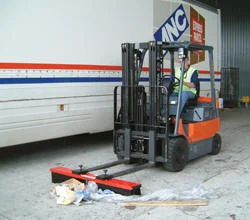
Municipal and facility maintenance: Snow plow blades, brush sweepers, and trash bin compactors that turn one forklift into a second piece of equipment during the off-season
Capacity, Compatibility, and Compliance
Every attachment purchase comes down to three practical considerations: how much the truck can still lift, whether the part will physically fit, and what has to be documented before it goes into service.
Capacity Derating
Adding an attachment shifts the load center forward and adds its own weight to whatever the forklift is carrying. Both factors lower the truck's rated capacity below what appears on the original data plate. We calculate the derated capacity for your forklift and attachment pairing before you order, so you know the real lifting number going in.
Carriage Class and Fit
Attachments are built to match a forklift's carriage class and hook type, not just its brand. We confirm carriage class, hydraulic requirements, and mast clearance against your forklift's specifications before your order ships, so the attachment mounts properly the first time.
Manufacturer Approval
Under 29 CFR 1910.178(a)(4), OSHA requires written approval from the forklift manufacturer before an attachment that affects capacity or safe operation goes into use, and the truck's capacity plates have to be updated to reflect the change. If the manufacturer is unavailable, a qualified registered professional engineer can issue that approval instead.
Why Buy Forklift Accessories From Platforms and Ladders
We're a GSA Contract Holder (Contract #47QSWA22D006L, CAGE Code 80DC4) and an MBE-certified national supplier of forklift accessories, material handling equipment, and industrial access products. We also carry related equipment, including pallet trucks and tuggers and material storage systems.
Call (888) 802-3651 or submit a request through our contact form, and our team will confirm fit and lead time before your order ships.
Forklift Accessory FAQs
-
Yes. OSHA's regulation for powered industrial trucks, 29 CFR 1910.178(a)(4), requires written approval from the forklift's manufacturer before any modification or attachment that affects capacity or safe operation is put into use. The truck's capacity, operation, and maintenance plates also have to be updated once the attachment is approved. If the manufacturer is out of business or unresponsive, a qualified registered professional engineer can provide that approval instead.
-
The attachment adds weight of its own, and it typically moves the load center farther from the front axle than the forklift's original fork setup. Both changes reduce how much the truck can safely lift, which is why the derated capacity, not the number on the original data plate, is the figure that matters once an attachment is in use.
-
Fit comes down to carriage class and hook type, plus hydraulic requirements for powered attachments and mast clearance for larger booms or lifters. We confirm these details against your forklift's specifications before an order ships.
-
Yes. OSHA's daily inspection standard for powered industrial trucks, 29 CFR 1910.178(q)(7), requires you to check the forklift before each shift. That inspection includes confirming the nameplate matches the attachment in use and that the attachment's controls function correctly. If an attachment fails its check, it keeps the truck out of service until it's fixed, just like any other forklift issue.