




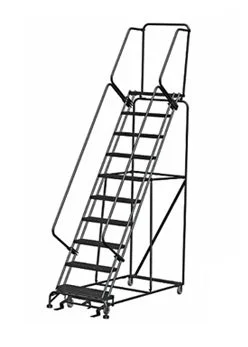
What Makes a Great Rolling Ladder?
Wide Base & Stability – A properly engineered wide base with four-point ground contact significantly reduces the risk of tipping, especially in fast-paced warehouse environments where workers frequently reposition ladders.
OSHA/ANSI Compliance – Choosing ladders that meet OSHA standards ensures built-in safety features, proper labeling, and reduced liability, while also aligning with workplace inspection requirements .
Heavy-Duty Construction – Industrial rolling ladders should include reinforced frames, welded joints, and durable materials that can withstand constant use, heavy loads, and long-term wear without structural fatigue.
Correct Height & Reach – Selecting the correct ladder height ensures workers maintain proper balance and posture, eliminating dangerous overreaching and improving overall task efficiency.
Weight Capacity Rating – Understanding duty ratings (light, medium, heavy-duty) ensures the ladder safely supports both the worker and any tools or materials being carried.
Locking Casters – High-quality rolling ladders feature smooth-rolling wheels paired with locking mechanisms that firmly secure the ladder in place during use, preventing unwanted movement .
Ergonomic Design – Features like handrails, angled steps, and spacious top platforms reduce strain, improve balance, and make repetitive climbing tasks safer and more comfortable.
Application-Specific Fit – Ladders should be selected based on warehouse layout, including aisle width, shelving height, and frequency of use, ensuring maximum efficiency and accessibility.
Material Selection (Aluminum/Fiberglass) – Aluminum ladders offer lightweight mobility and corrosion resistance, while fiberglass provides added durability and electrical safety in specialized environments.
Non-Slip Treads & Steps – Slip-resistant surfaces on steps and platforms improve traction, especially in environments where dust, grease, or moisture may be present, reducing fall risk.
A well-built rolling ladder is more than equipment—it’s a frontline safety tool. Investing in the right features protects workers, boosts productivity, and prevents costly accidents before they happen.
Final Take
The “best” ladder isn’t the cheapest—it’s the one that prevents injuries, lasts years, and keeps your team moving efficiently. Cut corners here, and you’ll pay for it later.
Rolling ladders are indispensable tools in various industrial and commercial settings, offering mobility and access to elevated areas. However, improper use can lead to accidents and injuries. Understanding common mistakes and implementing preventive measures is crucial for safety. Below are seven frequent rolling ladder mistakes and strategies to avoid them.